Showing posts with label s. Show all posts
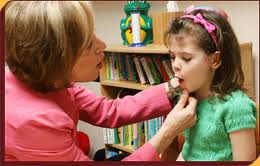
Speech disorders refer to difficulties in producing speech sounds or problems with voice quality. There may be a problem in the flow of words (stuttering), unclear production of speech, or problem with the volume and pitch of voice. There may also be trouble in using certain speech sounds like substitution of ‘f’ with ‘s’ (lisping). The child may also have the problem of limited speech where he may not talk at all or may have trouble talking in specific situations.

Shyness is felt as a mix of emotions, including fear and interest, tension and pleasantness. There may be an increase in heart rate and blood pressure. Shyness can be a normal, adaptive response to social experience. By being somewhat shy, children can withdraw temporarily and gain a sense of control

A habit is a strong behaviour pattern that is repeated over and over again. Habits may develop as entertainment for a bored child or, more commonly, as a coping mechanism to soothe anxiety. Sucking is a normal phenomenon in early occasional infancy. Thumb sucking when the child is hungry, disturbed and lonely, or is satisfying his urge for sucking, is a perfectly acceptable and normal phenomenon in children less than a year old.

Many people think that school is a place where the child learns to read, write, do arithmetic, memorise facts about geography, history and science. It is much more than this. A school is not just a place where the child learns these subjects. It is also a place where he learns to get on with people and is thus preparing for adult life.

The social development of the child is as important as her physical and intellectual development. The child must be able to communicate and interact with other people. Every baby has a unique personality waiting to develop. Watching the baby grow is like meeting a whole new person. Every baby has her own likes and dislikes

Sudden Infant Death Syndrome (SIDS) is defined as the sudden death of an infant under one year of age that cannot be explained after a thorough case investigation, including a complete autopsy, examination of the death scene, and review of the clinical history. SIDS is the leading cause of death in infants between one month and one year of age. Most SIDS deaths occur between the ages of two and four months.

Spitting up does not indicate a problem unless the baby is choking on the food, is spitting up excessively large amounts of milk or there is failure to gain weight.

Speech is a component of language by which humans communicate with each other through spoken words. Language also has other components which aid communication but are not verbal in nature.

In every child, the development of speech and language is an ongoing process, beginning at birth. The period from 0-5 years is recognized as important for all aspects of development in a child, including ‘hearing’ , ‘language’ and ‘speech’. The development of communication skill is essential for every child’s emotional, social and intellectual development.

Cancer that originates in the stomach is called stomach cancer. It can develop in any part of the stomach and from there spread to other parts of the body. Stomach cancer is one of the most quickly spreading cancers and may spread to other organs like the liver and lungs.

  • What is stomach cancer?
  • How is it caused?
  • What are the symptoms?
  • How is it diagnosed?
  • What is the treatment?
  • What are the side effects of treatment?

Skin cancer is a condition in which there is an uncontrolled cancerous multiplication of skin cells. The skin is the body’s shield against most foreign materials and is made up of many layers – the outermost layer called the epidermis and the next layer is called the dermis. Skin cancer usually originates in the cells of the epidermis called the basal cells.

  • What is skin cancer?
  • How is it caused?
  • What are the symptoms?
  • How is it diagnosed?
  • What is the treatment?

What is shoulder dislocation?Dislocation of the shoulder joint happens when the bones that make up the shoulder joint are moved apart so that the joint no longer functions. The shoulder is made up of two bones: the ball (the end of the arm bone, or humerus) and the socket (part of the shoulder blade, or scapula). When the ball part of the joint is dislocated in front of the socket, it is called an anterior dislocation. When it is dislocated behind the socket, it is called a posterior dislocation. In severe cases, ligaments, tendons, and nerves also can be stretched and injured.

A skull fracture is a break or fracture in one or more bones of the skull caused by head injury. Although the skull is tough, resilient and provides excellent protection to the brain, a severe head injury can result in skull fracture. Isolated skull fractures are not very serious, but their presence may suggest underlying brain injury, which could be serious.

Spasticity is a condition described by stiff or rigid muscles and exaggerated deep tendon reflexes, that interferes with muscular activity, gait, movement, or speech. This means that if one tries to move the arm or leg, resistance increases as the speed of the movement is increased. In some cases, the rapid increase in resistance leads to a ‘catch’ as the limb is moved, with a subsequent release of the resistance once the limb stops moving.

Adhesions are pieces of scar tissue, which cause the organs in the abdomen such as the bowel, liver, uterus or fallopian tubes to stick to one another. They most commonly occur after abdominal surgery as a part of the healing process. Adhesions can also form after inflammation of an organ in the abdomen or pelvis e.g., due to infections such as Tuberculosis.


Acne occurs when the oil glands of the skin become plugged. It is more common in people with oily skin. Acne occurs in adolescents and young adults. In acne there are blackheads (the plugs found in blocked-off oil glands), whiteheads (pimples), or red bumps on the face, neck, and shoulders.


Smoking :Cigarette smoking kills nearly about 420,000 people a year, making it more lethal than AIDS, accidents, homicides, suicides, drug overdoses, and fire. Smokers are also inhaling other chemicals including cyanide, benzene, formaldehyde, methanol (wood alcohol), acetylene (the fuel used in torches), and ammonia. Smoke also contains nitrogen oxide and carbon monoxide, which are harmful gases.

Spondylosis is a disorder that is caused by the degeneration of the discs which are soft cushions, present between the vertebrae. This results in the vertebrae rubbing together and exerting pressure on the nerves. As the condition progresses, the bones may move out of their natural positions, causing pain and disability.


Our Friends here !!!